Software & Platform Engineering
for Melbourne Businesses
Custom applications, native mobile, and production infrastructure built by actual software engineers. Not templates. Not outsourced teams. Real systems that scale.
"We practice what we preach. This website runs on our own custom-built deployment system with version management, automated testing, and instant rollback. Browse our /docs/ folder to see the architecture."
The Web Development Problem
Most "web development" companies aren't actually writing code. They're managing outsourced teams, customizing WordPress themes, or selling you cookie-cutter solutions that will cripple your business as you scale.
- • Agency Overhead: Paying $150/hour for project managers, not developers
- • Outsourced Teams: Your project handed to contractors with no accountability
- • WordPress Limitations: Plugins that break, security vulnerabilities, performance issues
- • No DevOps: Manual deployments, no testing, hope-and-pray updates
- • Technical Debt: Quick hacks that compound into unmaintainable messes
- • Vendor Lock-in: Proprietary systems you can't modify or migrate
- • Real Engineering: Actual software engineers writing production code
- • Direct Access: Work with the developers building your system
- • Custom Solutions: Built for your business, not adapted from templates
- • Professional DevOps: Automated testing, safe deployments, instant rollback
- • Clean Architecture: Maintainable code that scales with your business
- • Code Ownership: Full source code, documentation, deployment tools - yours forever
Why Most "Web Developers" Aren't Software Engineers
There's a massive difference between someone who can customize a WordPress theme and a software engineer who can architect scalable systems. The former charges $50/hour and creates technical debt. The latter charges $150-200/hour and builds foundations that last decades.
We're software engineers. We write Python automation scripts with 800+ lines of orchestration logic. We design database schemas with proper normalization. We build deployment pipelines with automated testing and zero-downtime releases. We create systems that don't just work today - they work five years from now when your business has 10x the traffic.
Engineering Capabilities
End-to-end engineering from database architecture to native mobile apps, DevOps automation to production infrastructure. Everything you need to build and run real systems.
Frontend Development
Technologies
- ▸ PHP 8.2+: Modern, type-safe backend rendering
- ▸ JavaScript: Vanilla JS and frameworks when needed (not default)
- ▸ Tailwind CSS: Utility-first responsive design system
- ▸ Progressive Enhancement: Works without JavaScript, better with it
Approach
- ▸ Mobile-First: Designed for phones, enhanced for desktop
- ▸ Performance: Fast loading, minimal JavaScript bloat
- ▸ Accessibility: WCAG compliance built-in
- ▸ SEO-Friendly: Semantic HTML, proper meta tags, schema markup
Backend Development
Core Technologies
- ▸ PHP 8.2+: Type hints, strict types, modern patterns
- ▸ Python 3.12+: Automation, data processing, DevOps tools
- ▸ RESTful APIs: Clean endpoints, proper HTTP methods
- ▸ Session Management: Secure, Redis-backed sessions
Advanced Features
- ▸ Authentication: WebAuthn, OAuth, traditional logins
- ▸ Rate Limiting: Redis-based request throttling
- ▸ Caching: Multi-layer caching strategies
- ▸ Background Jobs: Task scheduling and queue systems
Database Architecture & Data Management
Database Design
- ▸ Schema Design: Proper normalization, indexing strategies
- ▸ Migration Systems: Version-controlled schema changes (Phinx)
- ▸ Data Integrity: Foreign keys, constraints, validation
- ▸ Query Optimization: EXPLAIN analysis, index tuning
Data Operations
- ▸ Backup Strategies: Automated daily backups with offsite sync
- ▸ Multi-Environment: Dev/staging/prod database separation
- ▸ Data Migration: Safe data transfer between systems
- ▸ Security: Parameterized queries, prepared statements
DevOps & Infrastructure Automation
Deployment & Testing
- ▸ Git Workflows: Branching strategies, worktrees, proper versioning
- ▸ Automated Testing: Pre-deployment validation (our system tests 110+ pages)
- ▸ Version Management: Semantic versioning with automated bumps
- ▸ Zero-Downtime: Blue-green deployments, atomic updates
Safety & Recovery
- ▸ Instant Rollback: Complete snapshots enable <2 min recovery
- ▸ Environment Isolation: Dev/staging/prod separation
- ▸ Migration Safety: Schema comparison blocks unsafe deployments
- ▸ Monitoring: Service health checks, error alerting
Software Architecture & Design Patterns
Architecture Principles
- ▸ Multi-Environment: Isolated dev/staging/prod environments
- ▸ Configuration-Driven: Environment variables, config files
- ▸ Clean Code: SOLID principles, readable structure
- ▸ Modular Design: Reusable components, DRY principle
Development Standards
- ▸ Scalable Patterns: Built to handle 10x growth
- ▸ Documentation: Inline docs, architecture decision records
- ▸ Error Handling: Proper logging, user-friendly messages
- ▸ Security First: Input validation, output encoding, CSRF protection
Ready to Build Something Professional?
Free 30-minute consultation to discuss your project requirements and technical approach
Schedule ConsultationCase Study: This Website
Our own infrastructure demonstrates exactly what we build for clients - professional development with deployment automation, testing, and zero-downtime releases.
The Challenge
We needed a premium business website that could demonstrate our technical capabilities while serving as a revenue-generating platform. It needed to scale safely, deploy without downtime, support multiple environments, and showcase professional software engineering practices. Most importantly, we needed to practice what we preach - if we're telling clients we build professional systems, our own website better be bulletproof.
The Solution: Professional Infrastructure
Code Breakdown by Language
Key Features We Built
1. Version Management System (841 Lines of Python)
A comprehensive orchestration system that automates the entire version bump and deployment process with safety checks at every step.
- ✓ Automated Testing: 110+ pages validated before every deployment
- ✓ Snapshot Creation: Complete system backup before changes
- ✓ Git Integration: Automatic commits, tags, and pushes
- ✓ Database Logging: Complete audit trail of all deployments
- ✓ Service Management: Automatic PHP-FPM reloads
- ✓ Notifications: Pushover alerts for deployment status
Impact: Zero unplanned downtime since version 2.0.6. Every deployment is tested, logged, and reversible in under 2 minutes.
2. Database Migration Detection System (398 Lines of Python)
Automatic schema comparison between development and production environments that prevents broken deployments before they happen.
- ✓ Schema Comparison: Automatic detection of table/column differences
- ✓ Promotion Blocking: Stops unsafe deployments automatically
- ✓ Migration Guidance: Generates Phinx migration templates
- ✓ Zero Data Loss: Guaranteed schema safety
Impact: Prevented multiple potentially broken deployments. The system blocked a v2.2.1 promotion that would have created schema inconsistencies across 7 tables.
3. Configuration-Driven Lead Management
Intelligent form system with lead scoring, UTM tracking, HubSpot integration, and rate limiting - all configured in a single PHP file.
- ✓ Lead Scoring: Location + budget + urgency algorithms
- ✓ HubSpot Integration: Automatic email categorization
- ✓ Rate Limiting: Redis-based spam protection
- ✓ UTM Tracking: Full campaign attribution
- ✓ Database Persistence: All leads stored locally
- ✓ Specialized Forms: Home automation, small business, network
Impact: Revenue-generating lead capture from Google Ads campaigns. Premium suburbs automatically scored higher, urgent requests flagged for immediate follow-up.
4. WebAuthn/Passkey Authentication System
Modern passwordless authentication with facial recognition and hardware key support, fallback to traditional passwords.
- ✓ Passkey Support: WebAuthn API integration
- ✓ Biometric Auth: Face ID, Touch ID, fingerprint
- ✓ Fallback: Traditional password authentication
- ✓ Security: Admin panel protection
Impact: Modern authentication without external dependencies. Login with facial recognition on iPhone/Mac, fallback to password on any device.
5. Analytics & Monitoring Infrastructure
Comprehensive tracking system with IP geolocation, bot detection, UTM campaign tracking, and performance monitoring.
- ✓ IP Geolocation: Visitor location with Redis caching
- ✓ Bot Detection: Filter out non-human traffic
- ✓ UTM Tracking: Full campaign attribution
- ✓ Performance Logs: Page load time tracking
- ✓ Task Monitoring: Scheduled job execution history
- ✓ Security Scanning: Automated vulnerability checks
Impact: Complete visibility into site performance, visitor behavior, and system health. Proactive issue detection before users notice problems.
Technical Achievements
The Result
A website that IS a working demonstration of professional software engineering. Not screenshots of projects. Not vague claims about capabilities. The actual infrastructure we use every day to run our business.
When we tell clients we build systems with version management, automated testing, zero-downtime deployment, and instant rollback - they can see the code. Browse our /docs/ folder (56 documentation files). Review our git commit history. Test our deployment system.
This website IS our portfolio - and it demonstrates exactly what we can build for you.
Case Study: Business Automation Platform
A production system handling 38,000+ API calls daily - built from scratch with zero licensing fees.
The Challenge
Business automation at scale requires robust job scheduling, queue management, API integrations, and real-time monitoring. Off-the-shelf solutions come with monthly licensing fees, limited customization, and vendor lock-in. We needed a system that could handle high-volume API operations, manage complex job workflows, and provide complete visibility into system health - without ongoing software costs.
The Solution: Custom Automation Platform
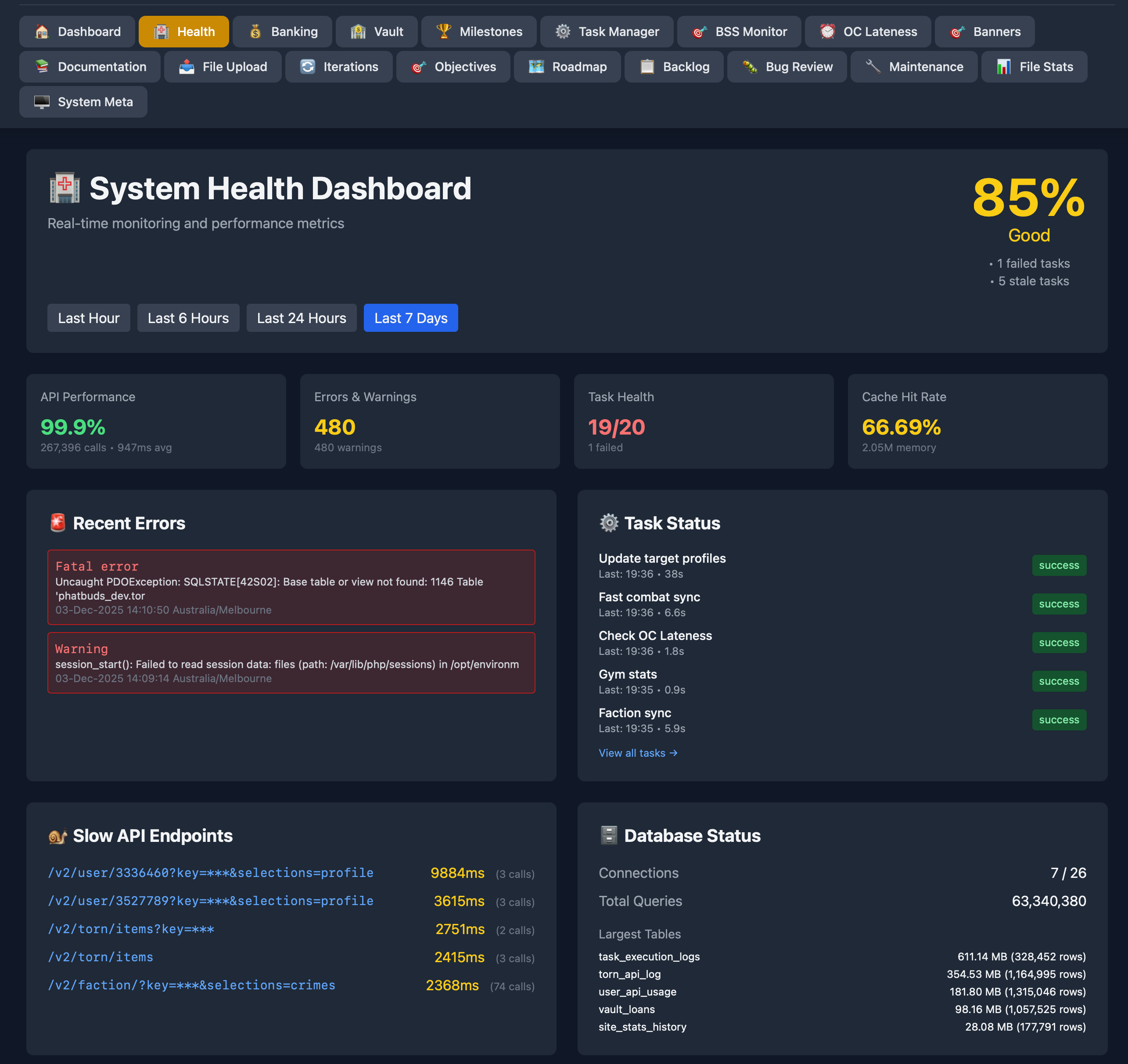
System Dashboard
Real-time system health monitoring with CPU, memory, and disk metrics. Job execution status and queue depth at a glance.
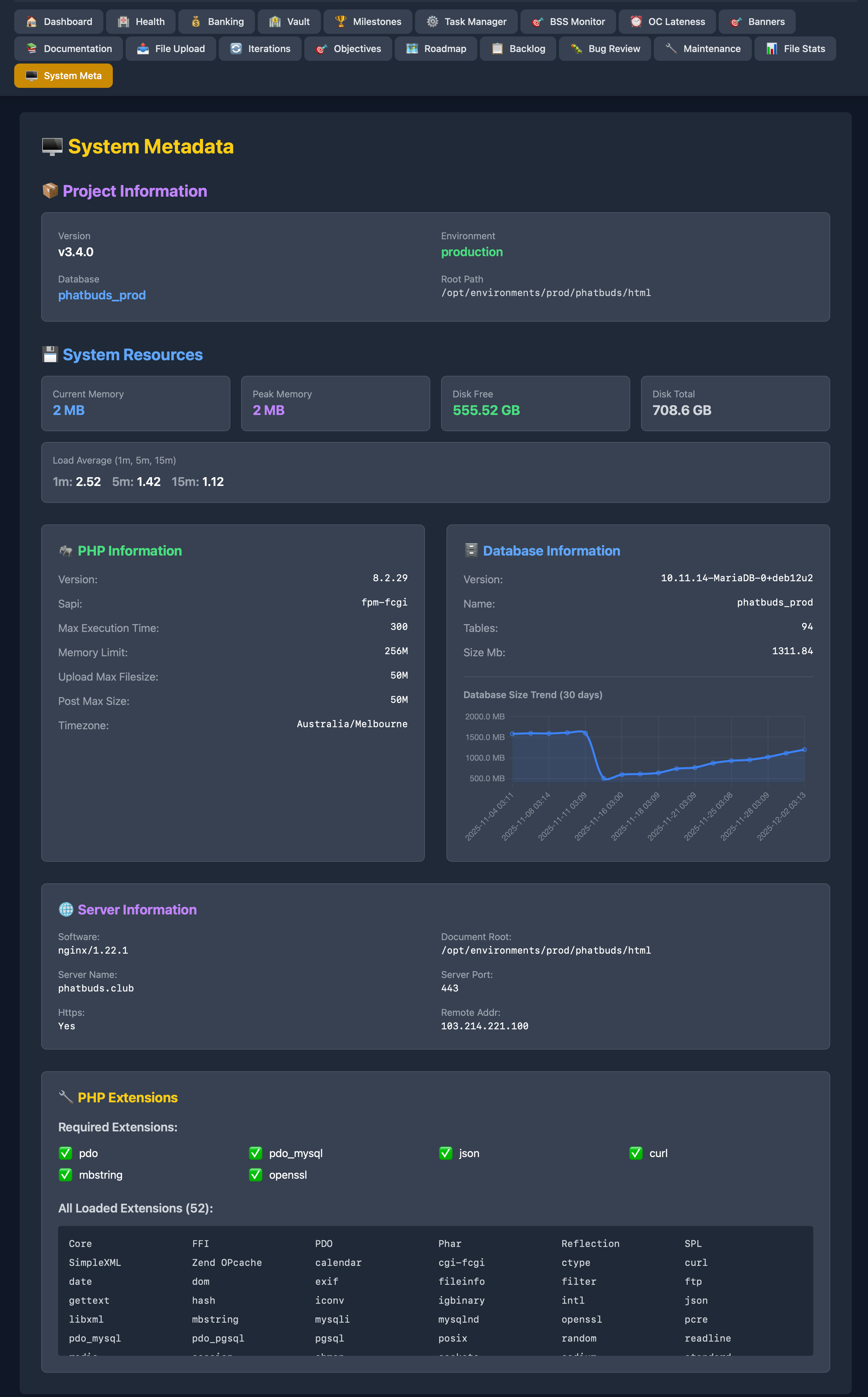
Job Management
Complete job execution history with status tracking, timing metrics, and detailed logging for debugging.
Technical Implementation
Core Architecture
- ✓ Custom APIs: Inbound webhooks and outbound integrations
- ✓ Job Queue System: Priority-based execution with retry logic
- ✓ Redis Caching: High-performance data layer
- ✓ Real-time Monitoring: System health dashboards
Operations
- ✓ Custom CI/CD: Automated testing and deployment
- ✓ Execution Logging: Complete audit trail of all operations
- ✓ Error Handling: Graceful failures with alerting
- ✓ Scalable Design: Built to handle growth
The Result
A production-grade automation platform processing tens of thousands of API calls daily, serving 100 users, with zero monthly licensing fees. Built entirely by hand - no off-the-shelf platforms, no vendor lock-in, no surprise costs.
This is the difference between buying software and building software. When you own the code, you control the costs, the features, and the future. No sales calls when you want to add users. No artificial limits. No "enterprise tier" upsells.
This is what real software engineering looks like - and exactly what we build for clients.
Want Infrastructure Like This for Your Business?
Let's discuss your project requirements and build something professional
Get Project QuoteDevelopment Services We Offer
End-to-end development services from MVP prototypes to enterprise applications. Transparent pricing, code ownership included.
Custom Web Application Development
What You Get
- ✓ Custom-built solutions, not WordPress or template modifications
- ✓ Scalable architecture designed for 10x growth
- ✓ Professional codebase (maintainable, documented)
- ✓ Modern PHP 8.2+ and Python 3.12+ where appropriate
- ✓ Responsive design (mobile-first approach)
- ✓ Complete documentation and deployment tools
Ideal For
- → Internal business tools and dashboards
- → Customer portals and self-service systems
- → Data management and reporting platforms
- → Booking and scheduling systems
- → E-commerce platforms (custom, not Shopify)
- → Workflow automation tools
Legacy System Modernization
What We Do
- ✓ Database migration strategies and execution
- ✓ Code refactoring and cleanup (remove technical debt)
- ✓ Modern authentication integration (OAuth, SSO)
- ✓ API development for old systems
- ✓ Documentation creation (often missing entirely)
- ✓ Security updates and vulnerability patching
Common Scenarios
- → PHP 5 to PHP 8+ migration
- → MySQL to modern database architecture
- → FTP deployments to proper CI/CD
- → No version control to Git workflows
- → Unmaintainable code to clean architecture
- → Manual processes to automation
API Development & Integration
Services
- ✓ RESTful API design and development
- ✓ Third-party integrations (HubSpot, Stripe, etc.)
- ✓ Webhook systems for real-time data
- ✓ OAuth/API key management
- ✓ Rate limiting and security
- ✓ API documentation (OpenAPI/Swagger)
Use Cases
- → Connect mobile app to existing system
- → Sync data between multiple platforms
- → Enable partner integrations
- → Payment gateway integration
- → CRM/marketing automation sync
- → Microservices communication
DevOps & Deployment Automation
What We Build
- ✓ Deployment pipeline creation
- ✓ Automated testing frameworks
- ✓ Backup and recovery systems
- ✓ Monitoring and alerting
- ✓ Git workflow design
- ✓ Environment separation (dev/staging/prod)
Benefits
- → Deploy confidently (automated testing catches bugs)
- → Recover instantly (complete snapshots before changes)
- → No downtime (blue-green deployments)
- → Complete audit trail (know who changed what when)
- → Sleep better (monitoring alerts you to issues)
- → Scale safely (test in dev, deploy to prod)
Database Architecture & Optimization
Services
- ✓ Database schema design from scratch
- ✓ Migration system setup (Phinx or custom)
- ✓ Query optimization and indexing
- ✓ Backup and recovery strategy
- ✓ Multi-environment database sync
- ✓ Data integrity enforcement
Common Issues We Fix
- → Slow queries (missing indexes, bad joins)
- → Denormalized mess (duplicate data everywhere)
- → No migration system (manual SQL changes)
- → No backups (or untested backups)
- → Dev/prod schema drift
- → Data integrity violations
MVP (Minimum Viable Product) Development
What You Get
- ✓ Rapid prototyping (4-8 week delivery)
- ✓ Core features only (no bloat)
- ✓ Scalable foundation (not throwaway code)
- ✓ Production deployment included
- ✓ Basic documentation
- ✓ Clear path to scale
Ideal For
- → Startups testing product-market fit
- → Internal tools (prove value before scaling)
- → New business ideas
- → Client demos and proof-of-concept
- → Rapid market entry
- → Budget-conscious projects
Native Mobile App Development
What We Build
- ✓ Native iOS: Swift development for iPhone/iPad
- ✓ Native Android: Kotlin development for all Android devices
- ✓ API Integration: Connect to existing backends or build new
- ✓ Offline Support: Local storage and sync capabilities
- ✓ Push Notifications: Real-time user engagement
- ✓ App Store Deployment: Full submission and approval support
Why Native?
- → Performance: Fastest possible execution, smooth animations
- → Full Device Access: Camera, GPS, sensors, biometrics
- → Platform UX: Feels like a "real" app, not a web wrapper
- → App Store Presence: Discoverability and credibility
- → Long-term Maintenance: Platform updates handled cleanly
- → Security: Native security features and app signing
Our Technology Stack
Battle-tested technologies optimized for reliability, security, and long-term maintainability
Languages
Backend, APIs, web applications
Automation, DevOps, data processing
Systems programming, CLI tools, performance
Native iOS development
Native Android development
Frontend, interactive applications
Type-safe JavaScript, enterprise apps
Automation, scripting, CI/CD
MariaDB, MySQL, PostgreSQL
Frameworks & Tools
Utility-first responsive design
Database schema version control
Structured professional logging
PHP dependency management
Infrastructure
High-performance reverse proxy
FastCGI process management
Session storage, rate limiting
Ubuntu/Debian servers
DevOps & Version Control
Worktrees, branching strategies
Code hosting, CI/CD pipelines
Python deployment orchestration
Background jobs, task scheduling
Why This Technology Stack?
These aren't trendy frameworks that will be obsolete in 2 years. They're proven technologies powering millions of websites for decades.
Unlike Node.js/React stacks requiring expensive hosting, our stack runs efficiently on modest servers ($50-200/month vs $500+/month).
Any PHP developer can read this code in 10 years. Not dependent on specific framework versions or obscure libraries.
Mature security ecosystems with decades of hardening. Known attack vectors, established best practices, active security teams.
Fast page loads, efficient database queries, minimal JavaScript bloat. Optimized for real-world usage, not benchmark tests.
PHP and Python developers are abundant and affordable. Not locked into finding specialists in obscure frameworks.
Tired of Agencies and Empty Promises?
Work directly with software engineers who write the code and own the results
Start Your ProjectOur Development Process
Transparent, iterative development with weekly progress updates and continuous client collaboration
Discovery & Planning
1-2 WeeksActivities
- • Requirements gathering sessions
- • Database schema design
- • Architecture planning
- • Technology selection
- • User flow mapping
Deliverables
- • Project specification document
- • Database schema diagrams
- • Architecture overview
- • Timeline and milestones
- • Final budget breakdown
Environment Setup
1 WeekInfrastructure
- • Git repository initialization
- • Development server configuration
- • Database setup and structure
- • CI/CD pipeline basics
- • Environment separation (dev/staging/prod)
Foundation
- • Documentation framework
- • Code standards setup
- • Authentication system scaffold
- • Base layout and styling
- • Client access to dev environment
Core Development
4-12 WeeksApproach
- • 1-week sprint cycles
- • Weekly progress demonstrations
- • Continuous client feedback
- • Code reviews after each feature
- • Testing as we build
Focus
- • Core features first
- • Database models and relationships
- • API endpoints and business logic
- • User interface development
- • Integration with third-party services
Weekly Updates: Every Friday you receive a progress report with working demo links, completed features, and next week's plan.
Testing & Refinement
2-4 WeeksTesting
- • Comprehensive testing suite
- • Security auditing and penetration testing
- • Performance optimization
- • Mobile responsiveness verification
- • Cross-browser testing
Polish
- • UI/UX refinements
- • Error handling improvements
- • Loading state optimizations
- • Final client approval
- • Documentation completion
Deployment & Training
1-2 WeeksDeployment
- • Production environment setup
- • Deployment automation configuration
- • SSL certificates and security
- • Backup system implementation
- • Monitoring and alerting setup
Knowledge Transfer
- • Admin training sessions
- • Documentation handover
- • Deployment runbook
- • Troubleshooting guide
- • Support contact information
Post-Launch Support
OngoingIncluded (90 Days)
- • Bug fixes and issue resolution
- • Performance monitoring
- • Security updates
- • Email/phone support
- • Emergency response
Optional Ongoing
- • Monthly maintenance ($500-2,000/mo)
- • Feature additions
- • Regular security audits
- • Performance optimization
- • Technical consulting
Why Choose KTP Digital for Development
Not a marketing agency. Not outsourced developers. Real software engineers building professional systems.
Real Engineering
- ✓ Not a marketing agency with outsourced developers
- ✓ Actual software engineering experience (not just web design)
- ✓ Code that YOU can maintain (no proprietary lock-in)
- ✓ Professional documentation included
- ✓ Best practices built-in from day one
Melbourne-Based
- ✓ Face-to-face meetings when needed
- ✓ Australian business hours (no timezone issues)
- ✓ Understanding of local market and regulations
- ✓ Proper Australian contracts and invoicing
- ✓ ABN, GST-registered business
Transparent Process
- ✓ Weekly progress updates with demo links
- ✓ Access to development server (see progress real-time)
- ✓ No black box development - you see everything
- ✓ Code ownership from day one (your git repo)
- ✓ Detailed documentation of all decisions
Long-Term Value
- ✓ Maintainable codebase (readable, documented)
- ✓ Scalable architecture (built for 10x growth)
- ✓ Knowledge transfer (we teach you the system)
- ✓ Ongoing support available (not required)
- ✓ No vendor lock-in (hire anyone to maintain it)
The Difference: Builders vs. Brokers
Most "web development companies" are brokers - they sell you a project, then outsource it to contractors. You're paying agency rates ($150-200/hour) but getting contractor quality ($30-50/hour offshore developers).
We're builders. When you hire KTP Digital, you work directly with the software engineers writing your code. No middlemen. No project managers who've never written a line of code. Just experienced developers who own the results.
Frequently Asked Questions
Developer-focused answers to common questions
Do you use WordPress?
No. WordPress is great for blogs and simple websites, but terrible for custom web applications. We build custom systems that do exactly what you need without the overhead, security risks, and plugin hell of WordPress. Our code is cleaner, faster, more secure, and infinitely more maintainable.
Can you fix another developer's code?
Yes, but... We'll start with a code audit ($1,500-3,000) to assess what you have. Sometimes it's better to rebuild than fix. We'll give you an honest assessment: "This code is salvageable with refactoring" vs. "You're better off starting fresh."
We won't waste your money patching unmaintainable code. If it needs to be rebuilt, we'll tell you upfront.
What if I need changes after launch?
Three options: (1) Warranty period - Bug fixes are covered for 30-90 days. (2) Hourly development - Small changes billed at $150-200/hour. (3) Ongoing maintenance - Monthly retainer ($500-2,000/mo) for regular updates and features.
Do I own the code?
Absolutely. You get the full source code, git repository, documentation, deployment tools - everything. No licensing fees. No vendor lock-in. You can hire any developer to maintain it. The only thing we retain is the right to showcase architecture patterns (not your business logic) in our portfolio.
Can my in-house team take over maintenance?
Yes, that's the goal. We write clean, documented code specifically so your team (or any PHP developer) can maintain it. We'll provide training sessions and comprehensive documentation. The whole point is you're NOT dependent on us forever.
What happens if you're unavailable or go out of business?
You have the full source code and documentation. Any PHP developer can take over. We also maintain Architecture Decision Records (ADRs) explaining every major technical choice, so future developers understand WHY things were built certain ways. You're never locked in.
Do you sign NDAs and non-compete agreements?
Yes to NDAs (standard practice). Case-by-case for non-competes. If you're building something truly unique in a specific industry, we'll consider reasonable non-compete terms. We won't sign blanket non-competes that prevent us from working in entire industries.
How do you handle scope creep?
Transparent communication. When you request something outside the original scope, we'll flag it immediately: "This is a scope change that will add $X and Y weeks." You decide if it's worth it. We track all scope changes in writing. No surprise bills.
What's your testing process?
Multi-layer: (1) Developer testing - We test as we build. (2) Automated testing - Test suite validates functionality. (3) Client UAT - You test in staging environment. (4) Final QA - Comprehensive pre-launch check.
Our own website validates 110+ pages before every deployment. We practice what we preach.
Do you provide hosting?
We can, but recommend you control your own hosting. It's cheaper and you're not dependent on us. We'll help you set up hosting with your provider of choice (AWS, Digital Ocean, Vultr, etc.) and configure everything. Hosting typically costs $50-200/month depending on traffic.
Can you work with our existing development team?
Absolutely. We can integrate with your team, provide architecture guidance, code reviews, or handle specific components while your team handles others. We're collaborative, not territorial.
What industries do you serve?
Any industry needing custom web applications. We've worked with professional services, healthcare, education, retail, manufacturing, and more. If you need a database-driven web application, we can build it. Industry knowledge is helpful but not required - we learn your business.
Do you build mobile apps?
Yes - native iOS and Android. We build true native applications using Swift for iOS and Kotlin for Android. Native apps provide the best performance, access to all device features, and the polished experience users expect.
For simpler needs, we also build Progressive Web Apps (PWAs) that work across all devices from a single codebase. We'll recommend the right approach based on your requirements - sometimes a well-built web app is all you need.
How do payments work?
Project-based: Typically 30% deposit, 30% at halfway point, 40% at completion. Hourly: Invoiced weekly or bi-weekly. All invoices due within 7 days. We accept bank transfer (preferred), credit card (with processing fee), or PayPal.
What's your typical timeline?
Depends on scope: Small projects (2-4 weeks), Medium projects (6-12 weeks), Large projects (3-6 months). Add 1-2 weeks for initial discovery and planning. We'll give you a detailed timeline during the proposal phase.
What if we need it faster?
We can expedite projects with additional resources, but quality takes time. Rushing software development usually results in technical debt you'll pay for later. We'd rather deliver a solid foundation on schedule than a buggy mess early. If you need an MVP quickly, we can scope down features and build iteratively.
Do you offer financing or payment plans?
For projects over $50K, we can discuss extended payment terms. Typically: deposit, then monthly payments aligned with milestone completion. We're flexible with established businesses. For projects under $50K, standard payment terms apply.
What makes you different from other developers?
We're actually developers. Not a marketing agency. Not project managers coordinating outsourced teams. When you email us, you're talking to the people writing your code.
Plus: Our own website IS our portfolio. 116,000+ lines of code with professional DevOps, testing automation, and zero-downtime deployment. We practice what we preach.
Portfolio: Our Own Website
Most developers show screenshots. We show our entire codebase, documentation, and infrastructure.
Live Demonstration
- → Production: www.ktp.digital
- → Development: dev.ktp.digital
- → Documentation: Browse /docs/ folder
- → Test the forms, navigation, responsive design
Open Documentation
- → 56 documentation files
- → Architecture Decision Records (ADRs)
- → Database schema documentation
- → Deployment procedures
Key Statistics
Available for Review
- ✓ Architecture Decision Records (ADRs)
- ✓ Database schema documentation
- ✓ API documentation
- ✓ Deployment procedures
- ✓ Version management system
- ✓ Complete git commit history
- ✓ Testing automation scripts
- ✓ Database migration system
The Ultimate Portfolio Demonstration
Most developers show screenshots and vague descriptions. We show our entire infrastructure - browse our /docs/ folder, review our git commits, test our deployment system. This website IS our portfolio, demonstrating exactly what we can build for you.
Build Something Like This for Your BusinessReady to Build Something Professional?
Let's discuss your project and create a custom web application that scales with your business
1. Free Consultation
30-minute discovery call to discuss your needs
2. Detailed Proposal
Technical approach, timeline, and transparent pricing
3. Begin Development
Weekly updates as we build your solution
"We built a system with professional version management, zero-downtime deployment, and instant rollback for our own business."
Imagine what we can build for yours.